Stories · Where it came from
Where did the jeepney come from?
The short answer
The jeepney began as surplus U.S. military jeeps left in the Philippines after World War II. Filipino mechanics stripped them down, lengthened the bodies, added two long benches and a metal roof, and turned them into shared passenger vehicles. Nobody designed it from scratch.
Nobody designed it
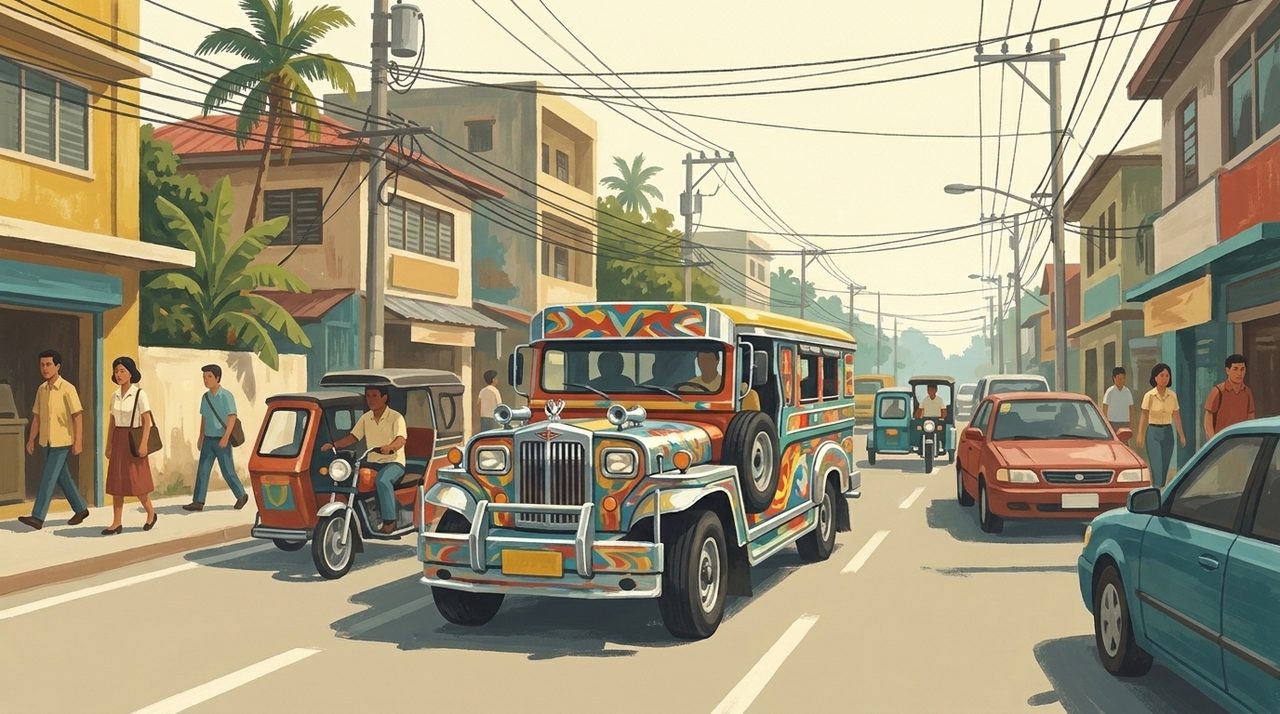
You’ve probably ridden one thousands of times. You’ve passed your fare forward, said “para po,” and squeezed in when the driver insisted there was room for one more. But the jeepney was never designed. Nobody planned it. It exists because of a war, a pile of leftover army vehicles, and a lot of Filipino improvisation.
Before the war: the auto calesa
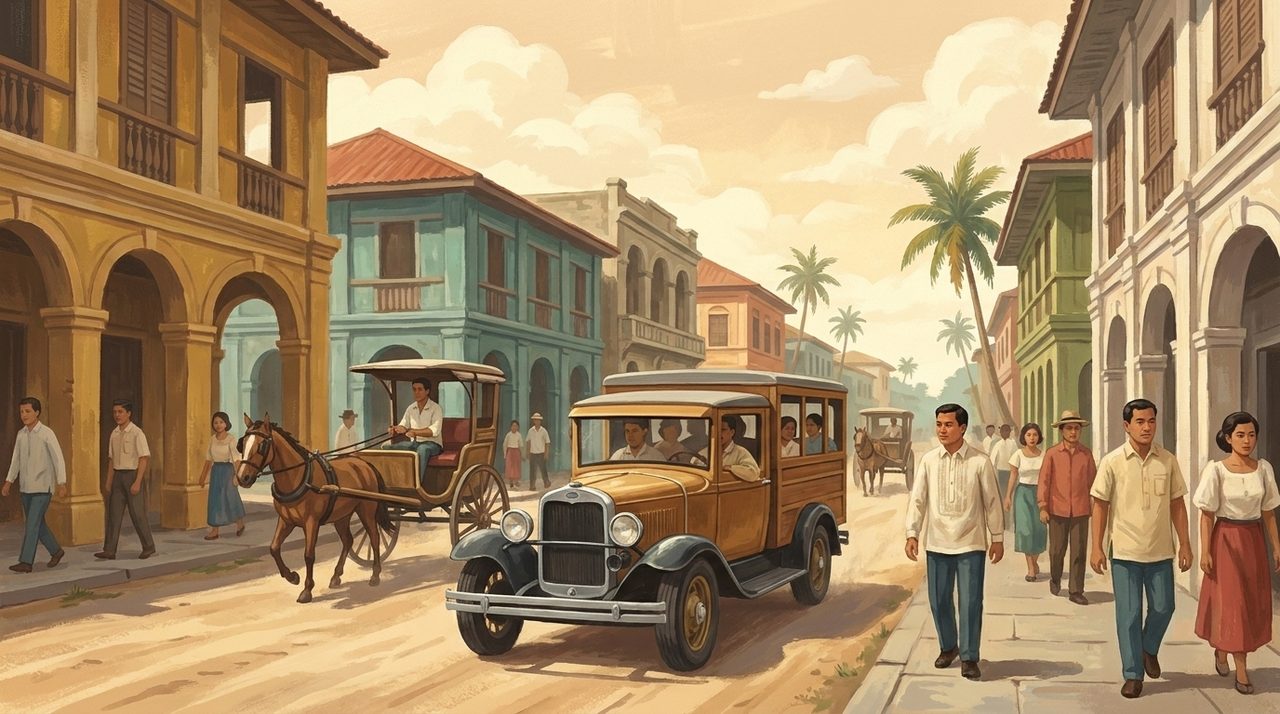
Before the war, Manila already had small shared cars carrying passengers on fixed routes. People called them auto calesas, or simply “AC.” So the idea of a cheap shared ride was already here. What was missing was the vehicle.
The jeeps left behind
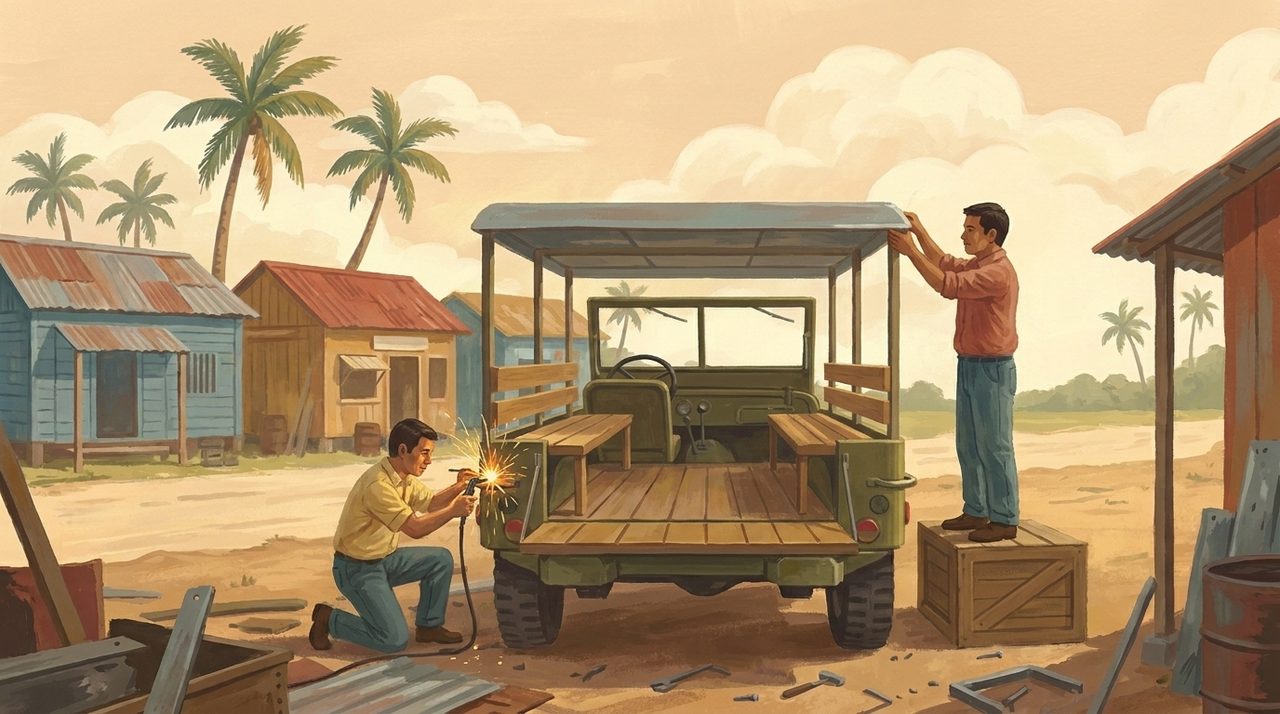
Then came World War II. By 1945, Manila was in ruins, and so was its public transport. But when American forces began to leave, they left something behind: military jeeps. Hundreds of surplus Willys and Ford jeeps were sold or given away to Filipinos.
And Filipinos looked at this small army vehicle and thought: we can fit more people in that.
So mechanics stripped them down and stretched the body. They added two long benches facing each other. They put a metal roof on top for shade. A vehicle built to carry a few soldiers was now carrying a whole neighborhood.
Where the name comes from
Where does the name come from? The explanation you’ll hear most often is that “jeepney” combines “jeep” and “jitney,” an old American word for a cheap shared taxi. It’s the most widely accepted story, but people who have looked for proof from the 1940s say the paper trail is thin. So even the name is a little bit of a mystery.
Leonardo Sarao, 1953
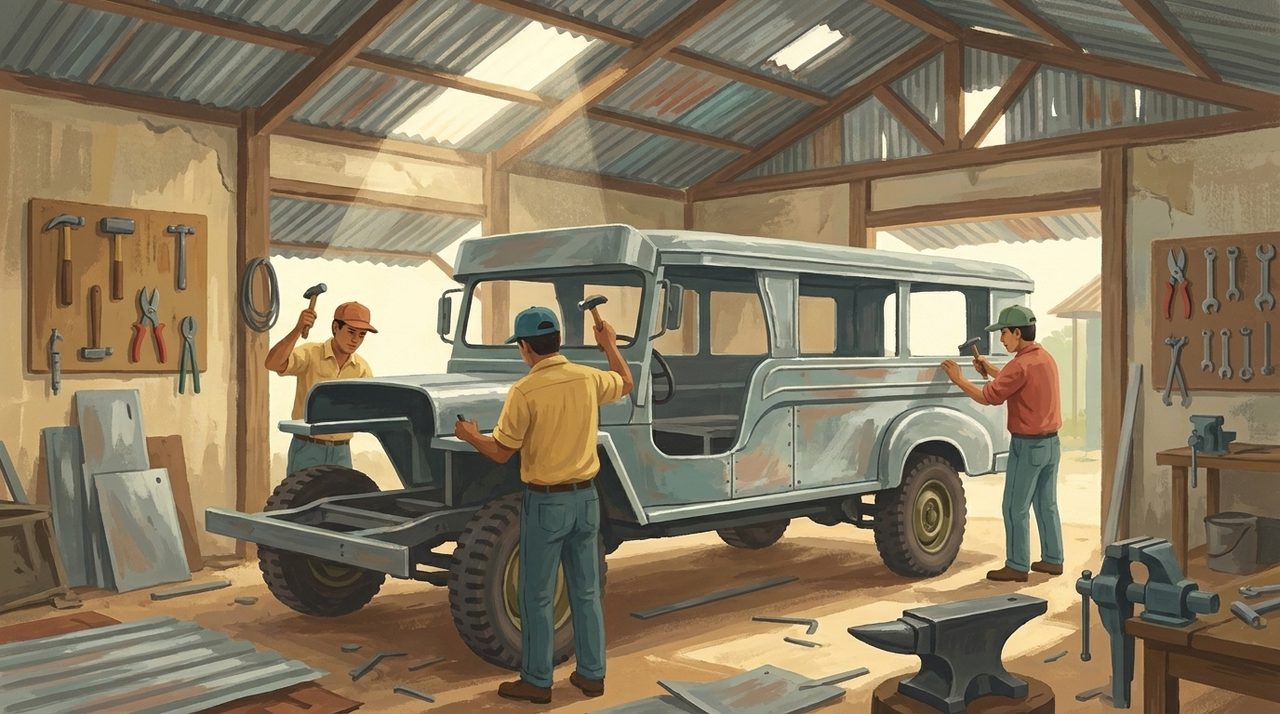
In 1953, a man named Leonardo Sarao opened a small workshop in Las Piñas. He had once been a kalesa driver, and then became a mechanic. The story goes that he started with just 700 borrowed pesos. He and his brothers built jeepneys by hand, with a longer body that could carry about twice as many passengers. Sarao Motors became the most famous jeepney maker in the country.
The art, and the World’s Fair
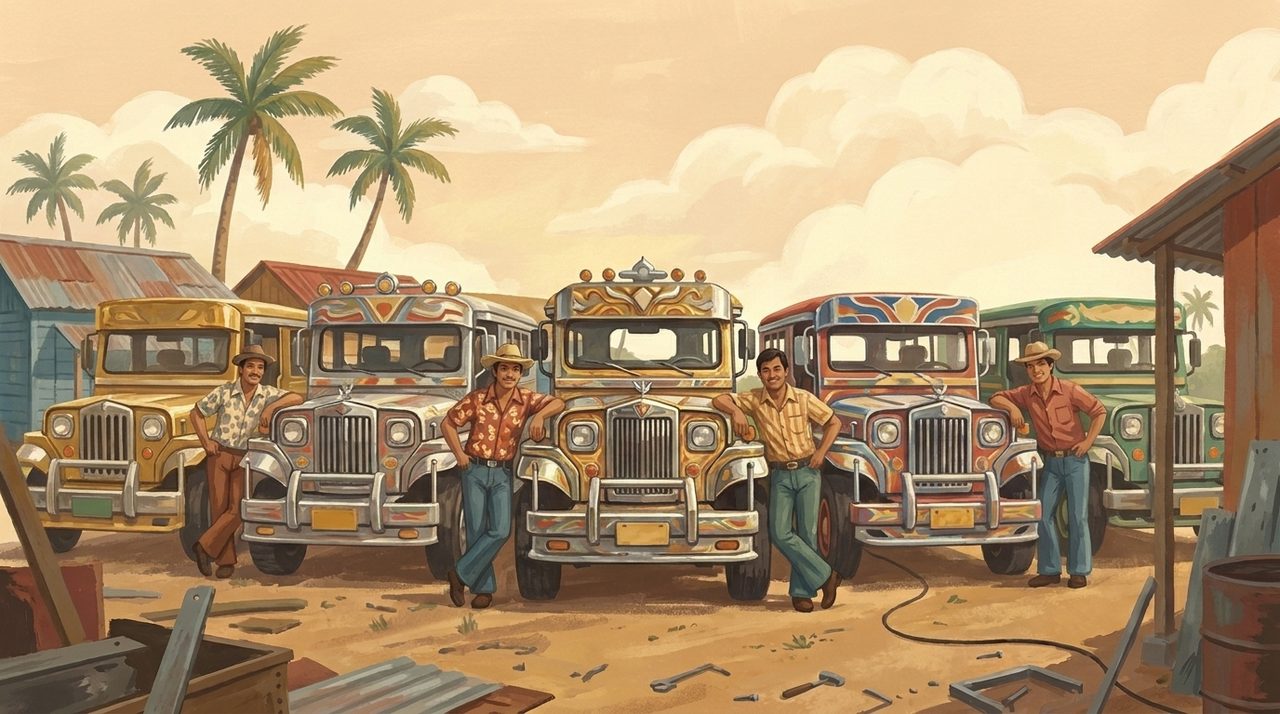
And then came the art. Chrome horses on the hood. Hand-painted names, saints, families, and basketball stars. No two looked the same. In 1964, a Sarao jeepney was displayed at the Philippine pavilion of the New York World’s Fair, as a symbol of the country itself.
The jeepney today
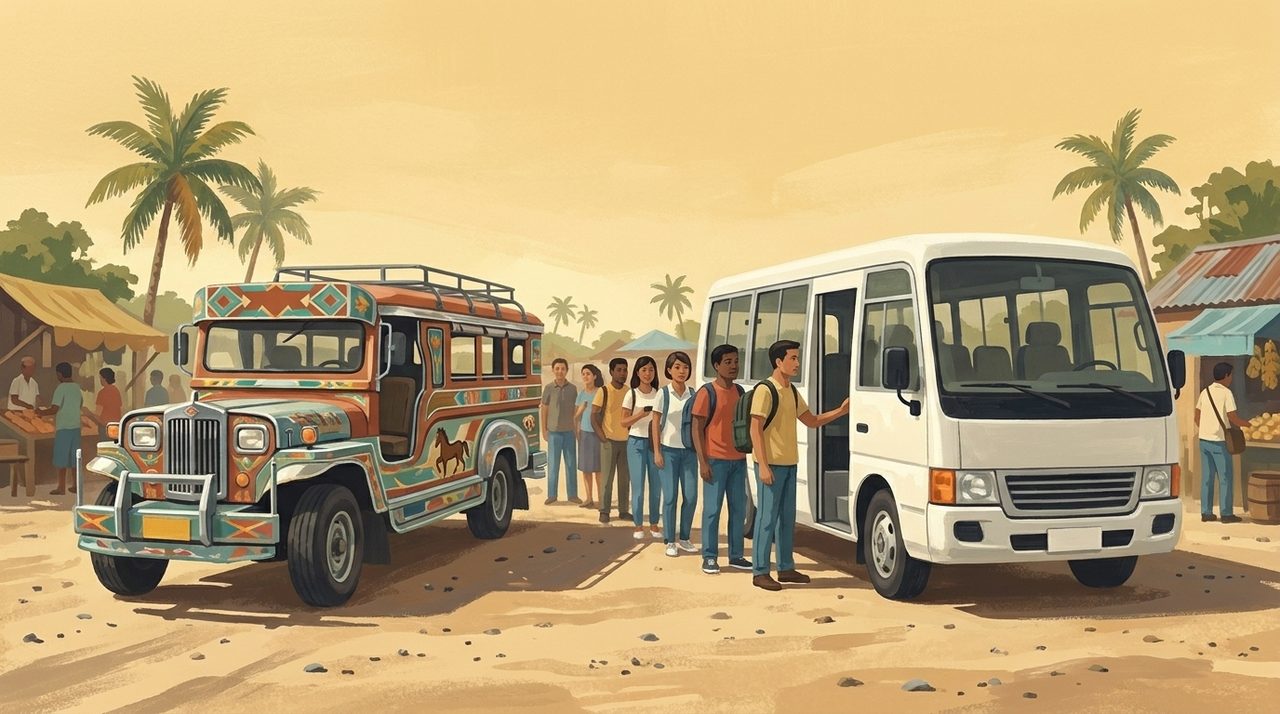
Today the jeepney is at a crossroads. In 2017, the government launched a modernization program to replace old units with cleaner, safer vehicles. Supporters point to pollution and passenger safety. Many drivers and operators say a modern unit can cost more than two million pesos, far more than they can afford. That debate is still going on.
A piece of history

But whatever the jeepney looks like in the future, its story stays the same. It began as a machine of war that somebody else left behind. Filipinos turned it into a way to get to work, to school, and back home.
So next time you say “para po,” remember: you’re stepping out of a piece of history.
Key dates
- 1930sShared cars called auto calesas carry passengers in Manila.
- 1945The war ends. Surplus U.S. military jeeps are sold or given away.
- 1953Leonardo Sarao opens a small workshop in Las Piñas.
- 1962Sarao Motors is incorporated.
- 1964A Sarao jeepney is shown at the New York World’s Fair.
- 2017The government launches the PUV Modernization Program.
What we’re not sure about
- The origin of the word. “Jeep” plus “jitney” is the usual explanation, but a researcher who looked for 1940s evidence found nothing that states it directly.
- The 700 pesos. That Sarao started with 700 borrowed pesos is a widely retold story. No source we read names the lender.
- The World’s Fair. We found only secondary sources. Most say one jeepney was exhibited; one says several.
- The price of a modern unit. Figures range from about ₱1.4 million to ₱2.8 million depending on who is quoted.
- Where modernization stands now. The debate was still active in the latest reports we found. We did not find a 2026 update.
Sources
- Wikipedia, "Jeepney" en.wikipedia.org
- Wikipedia, "Sarao Motors" en.wikipedia.org
- Wikipedia, "Leonardo S. Sarao" en.wikipedia.org
- Las Piñas City, "Sarao Jeepney" laspinascity.gov.ph
- Philstar (Aug 1, 2024), "Repurposed king of the road" philstar.com
- Filipeanut, "The jeepney: a history, and hopefully, a future" filipeanut.art
- Wikipedia, "Public Utility Vehicle Modernization Program" en.wikipedia.org
Spotted a mistake? Tell us and we will fix it and say so.